


Every service business knows that moment. A new client books once, the service goes fine, and then they vanish. No call, no email, no explanation. The owner is left wondering what went wrong, but most of the time, it has nothing to do with the quality of the work. It comes down to friction. The process of booking again, rescheduling, or even just remembering to come back felt like too much effort. And people avoid effort when they don’t absolutely need to deal with it.
That is the quiet loyalty crisis happening every single day in salons, studios, barbershops, wellness spaces, and independent practices. The fix is not a better Instagram page or another discount code. The fix is a smarter system running underneath the service that’s already being delivered.
Scheduling software for customer retention is not just about keeping a calendar full. It is about building the kind of smooth, low-effort experience that turns first-time visitors into regulars who book again without thinking twice.
Why Client Retention Is a Scheduling Problem in Disguise
A lot of business owners think retention is a marketing problem. Run a loyalty program. Send a thank-you email. Post more on social media. Those things help, but they treat symptoms instead of the real cause.
The actual moment retention is won or lost happens earlier, right when a client tries to book again.
If that process feels clunky, slow, or requires a phone call during business hours, a meaningful number of people will simply not bother. They will find someone else whose booking page loaded in two seconds on their phone at 11 pm. This matters even more in competitive service markets like Chicago, where someone renting a salon space for rent or running an independent studio is competing not just on skill but on convenience.
Research keeps showing that how easy it is to rebook is one of the biggest factors in whether a client returns. Not the price. Not even the outcome. The ease. That is why appointment scheduling retention is a strategic priority, not just something to think about after the fact.
What Scheduling Software Actually Does for Loyalty
Let’s get specific, because “scheduling software” can mean a lot of different things.
At the most basic level, it is a calendar tool. Clients pick a time, get a confirmation, and show up. That is just the starting point. What separates tools built for retention from basic booking widgets is everything that happens between appointments.
Automated Reminders That Actually Reduce No-Shows
A missed appointment costs money twice. The revenue is lost, and the client loses momentum. The longer the gap between visits, the less likely they are to come back. Automated reminders sent 48 hours and 24 hours before an appointment have been shown to cut no-shows dramatically across service industries.
But the best systems go further. They send a rebooking nudge a few days after an appointment ends, something simple like “Great seeing you. Ready to book your next session?” That one automated touchpoint does more for retention than most loyalty programs.
Personalization at Scale
When a system remembers that a client always prefers morning appointments, books a specific service every six weeks, or has a note about a preference, it creates an experience that feels personal even though it runs on autopilot. Booking software customer retention features work best when they help clients feel like the business actually knows them.
For independent operators, this kind of personalization used to require years of memory and a paper notepad. Now it lives in the software.
Seamless Rebooking
The fewer clicks between “I should book again” and “I just booked again,” the higher the retention rate. Period. If a client has to hunt for a website, click through a confusing interface, and re-enter their information every single time, some percentage of them will give up. Streamlined rebooking, especially with saved client profiles, makes loyalty the easiest path forward.
The Types of Businesses That Benefit Most
Customer loyalty scheduling tools matter across industries, but they make a particularly noticeable difference in service businesses where repeat visits drive the entire revenue model.
Think about a professional renting a lash room for rent in a shared studio. Their whole business depends on a steady stream of returning clients. If a client has to text every time they want to rebook, that creates a bottleneck. A smart scheduling system removes that bottleneck and keeps the calendar full without constant back and forth.
The same logic applies across the board: barbershops, esthetician suites, massage therapists, yoga instructors, podcast studios, and fitness coaches. Anywhere the relationship between provider and client is ongoing, scheduling infrastructure quietly determines how sticky that relationship actually becomes.
Different Types:
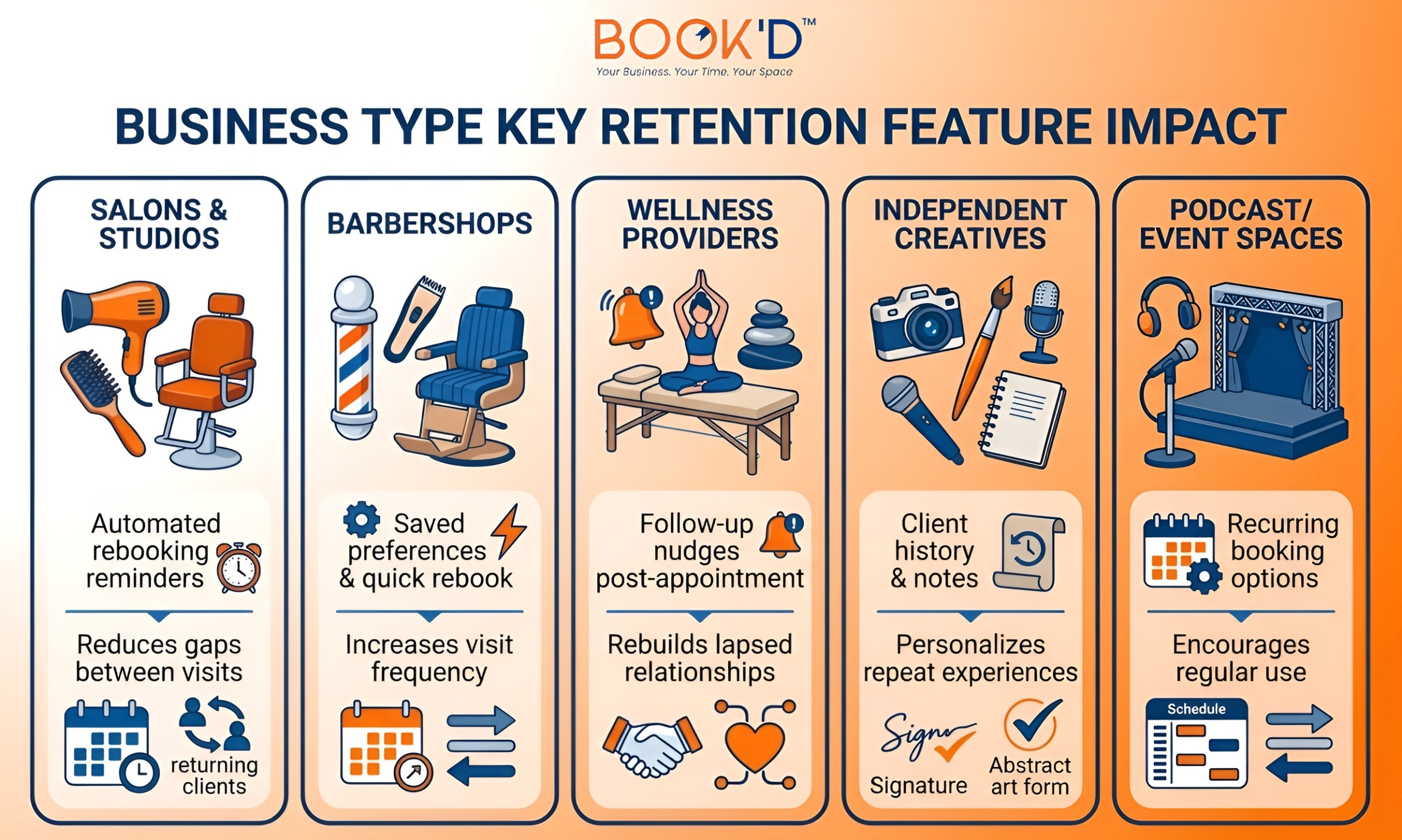
How Automation Fits Into the Bigger Picture
For anyone who wants to go deeper on the operational side, a guide on how online booking automation saves time breaks down exactly how removing manual scheduling tasks creates compounding benefits for small business owners. The short version is this: every minute spent on back-and-forth scheduling is a minute not spent on the actual work. Automation gives that time back.
But beyond efficiency, there is something more important happening when the right touchpoints get automated. The business is communicating reliability. A client who gets a timely reminder, an easy rebooking link, and a follow-up message after a visit sees that business as professional and organized, even if it is just one person working out of a rented suite. That perception directly feeds trust, and trust is the foundation of loyalty.
Common Mistakes Businesses Make With Scheduling
A few patterns come up repeatedly when service businesses struggle with retention, even though they already have a booking tool in place.
Setting it up and forgetting about it. Scheduling software is not a “launch and leave” tool. The businesses that get the most out of it revisit their automated messages, update their booking flows seasonally, and actually look at the data on no-show rates and rebooking intervals.
Not capturing enough client information upfront. The more known about a client from the very first booking, the more personalized every future interaction can be. A well-designed intake form during that first booking pays off across every subsequent visit.
Treating confirmation emails as an afterthought. That first confirmation email is the beginning of the client relationship, not just a receipt. A warm, on-brand confirmation sets a tone and starts building the sense that this business is worth coming back to.
Building a Loyalty Loop Through Better Scheduling
The businesses that retain clients best are not always the ones with the best skills or the lowest prices. They are the ones that make the whole experience, from booking to follow-up, feel effortless and consistent.
Scheduling software for customer retention works because it systematizes the behaviors that build loyalty: timely communication, easy rebooking, personalized service history, and reliable reminders. When these things happen automatically, the client experience gets better without requiring more hours from the business owner.
FAQs
Does scheduling software actually help with customer retention?
Yes, directly. Scheduling software improves retention by automating rebooking reminders, reducing no-shows, and making it easier for clients to return. Studies across service industries show that businesses using automated follow-up and rebooking tools see measurably higher repeat visit rates than those relying on manual processes.
What features should I look for in booking software for client retention?
The most impactful features are automated post-appointment follow-ups, reminders before appointments, easy rebooking options, and client profile storage. These tools remove friction from the repeat visit process, which is the single biggest factor in whether a client returns.
How often should a business follow up with clients after an appointment?
A good baseline is a reminder 48 to 24 hours before the appointment, a thank-you or feedback prompt within 24 hours after, and a gentle rebooking nudge around the typical return interval for the service type. Timing varies by industry, but consistency matters more than frequency.
Can small or solo businesses benefit from appointment scheduling retention tools?
Absolutely, and in many ways, they benefit more than larger operations. A solo provider or small studio often cannot dedicate time to manual follow-ups, so automation fills that gap without adding to the workload. It makes a small business feel organized and attentive in ways that directly influence client loyalty.
What is the difference between a booking tool and a retention-focused scheduling platform?
A basic booking tool handles calendar management. A retention-focused scheduling platform goes further by tracking client history, automating follow-up communications, offering rebooking prompts, and giving business owners data on visit frequency and gaps. The goal is not just filling slots; it is keeping the same clients coming back.