

The math starts circling in every barber’s head at some point. Watching a full book of clients come through the door and then watching a chunk of every cut walk away with the shop owner. The commission split that felt fair early on starts to sting once the chair stays full. That is usually when the questions about renting a chair begin.
But the jump from commission to rental is not just about keeping more money. It shifts the whole financial picture. Some months overflow and some months run lean. The chair rent stays the same either way. Understanding what the numbers actually look like helps settle the nerves before making the leap.
How Much Can Barbers Make Renting a Chair Once the Math Gets Real
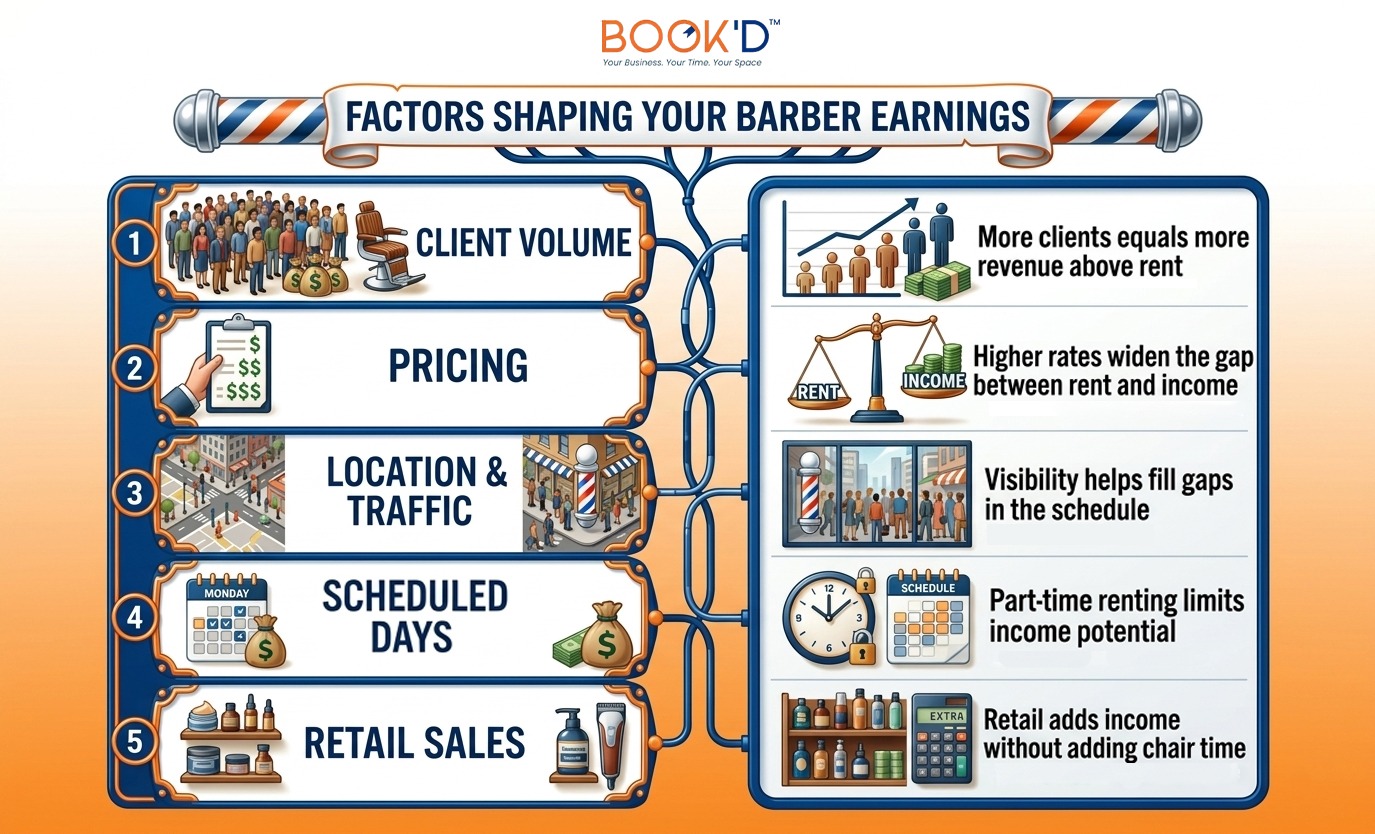
The question how much can barbers make renting a chair does not have one neat answer because income depends on client volume, service pricing, and how many days the chair is actually in use. But the formula is straightforward. Total earnings minus chair rent minus supplies equals take-home pay. Everything above the rental fee stays in the barber’s pocket.
A barber seeing eight to ten clients a day at standard pricing can bring in solid weekly revenue. Subtract a flat chair rental fee, and the numbers start to look very different from a commission split. The difference becomes especially clear during busy seasons. Holiday rushes and wedding months pack the schedule, and every extra client pays full rate directly to the barber. The rent stays fixed no matter how many people sit in the chair. A private barber studio takes this even further by offering a fully enclosed room where premium pricing feels natural to clients.
Barber Chair Rental Income and Why the Numbers Swing by Location
The barber chair rental income potential shifts based on where the chair sits. A chair in a busy downtown shop with steady walk-in traffic fills differently than one in a quiet suburban suite. The rental fee usually reflects that. Higher traffic locations cost more because they offer built-in visibility.
But walk-ins are not the whole story. A barber with a loyal following who books appointments directly relies less on the shop’s location to fill the day. Those clients follow the person, not the address. That kind of barber can often do well in a lower-cost barber studio away from expensive retail strips. The savings on rent drop straight to the bottom line. The tradeoff is that marketing falls entirely on the barber. Building a brand and keeping a social presence active brings clients through the door when foot traffic does not.
What Affects Chair Rental Income Most
 Ready to Run Your Own Numbers? Filter chair rentals by location and weekly rate. Find a space with Just-Booked where the math works in your favor.
Independent Barber Earnings and the Shift from Employee to Owner
The path to independent barber earnings is not just about the money. It is about control. Setting personal hours, choosing which products to use, and building a brand that reflects a specific style. These things matter, and they also affect income. A barber who curates a particular experience can charge more than someone working under a shop’s standard pricing structure.
But independence also brings expenses that commission barbers never see. Supplies, booking software, liability insurance, and payment processing fees all come out of pocket. These costs exist under commission, too, but the shop absorbs them. Budgeting for them before making the switch prevents the kind of slow panic that comes from watching profits shrink to surprise expenses. A barber chair for rent inside an established shop offers a middle ground. Some infrastructure stays in place while the barber keeps far more of each service dollar. For a broader look at the independent path, this guide on starting a barber business without a shop covers the full transition.
Barber Booth Rent Income Potential and What Caps It
The barber booth rent income potential has a ceiling that is mostly set by time. There are only so many hours in a day and so many heads a barber can cut before exhaustion sets in. Growth beyond that ceiling means raising prices, selling products, or adding services. A private barber studio makes premium pricing feel justified to clients because the experience feels elevated. One-on-one appointments in a quiet, locked room carry a different perceived value than a chair on a loud, open floor.
Building a retail side also stretches income without adding chair time. Selling pomades, beard oils, and grooming products that clients already ask about turns casual conversations into additional revenue. The best retail setups feel natural rather than pushy. The products sit visible, and the barber recommends them when the moment makes sense. For help weighing the rental decision, this guide on chair rental versus commission breaks down the financial side in detail. For the practical steps of finding a space, this guide on how barbers rent a chair explains the process clearly.
Making the Numbers Work
Chair rental is not a guarantee of higher income. It is a structure that rewards consistency and client loyalty. The barbers who thrive under this model are the ones who show up reliably, treat every appointment like it matters, and understand that the business side is just as important as the craft.
Just-Booked connects barbers with spaces that match their clientele and their budget. Chair rentals in busy shops, private studios for those ready to go solo, and flexible arrangements that fit different stages of a career. Transparent listings and clear terms so the focus stays on the work.
FAQs
How much can barbers make renting chairs vs. commission?
A barber with a consistent clientele usually earns more under a rental model because the flat fee stays fixed and service income remains whole. The discrepancy widens in busy months and narrows in sluggish ones.
What should I budget for chair rental?
Independent barbers pay for supplies, liability insurance, booking software, payment processing, and personal marketing. Budgeting these before switching prevents surprises.
For a new barber, is chair rental worth it?
Client volume matters. New barbers building a following may benefit from commission. The rental model usually wins when the schedule fills consistently.
How many days a week must I work to make chair renting profitable?
Three to four full days pay rent and leave profit for most barbers. High and steady daily client counts are preferable for part-time rental.
Can I rent a chair part-time while working?
Yes, and some barbers become independent this way. A chair rental a couple of days a week while on commission elsewhere provides steadiness during transition.