

Finding a room that feels right is a good feeling. Nice light, clean floors, and a sink in the corner. Then someone asks about permits and licensing, and suddenly the whole thing feels heavier than it did five minutes ago. That moment has stopped plenty of talented estheticians from moving forward with a rental.
The confusion mostly comes from people mixing up two different things. The license needed to practice esthetics and whatever paperwork might be required to rent a room. They are not the same. For most beauty professionals, the answer is simpler than the anxiety suggests. The license that matters most is the one already sitting in a wallet or hanging on a wall somewhere.
Do You Need a License to Rent a Beauty Space or Just to Work in One?
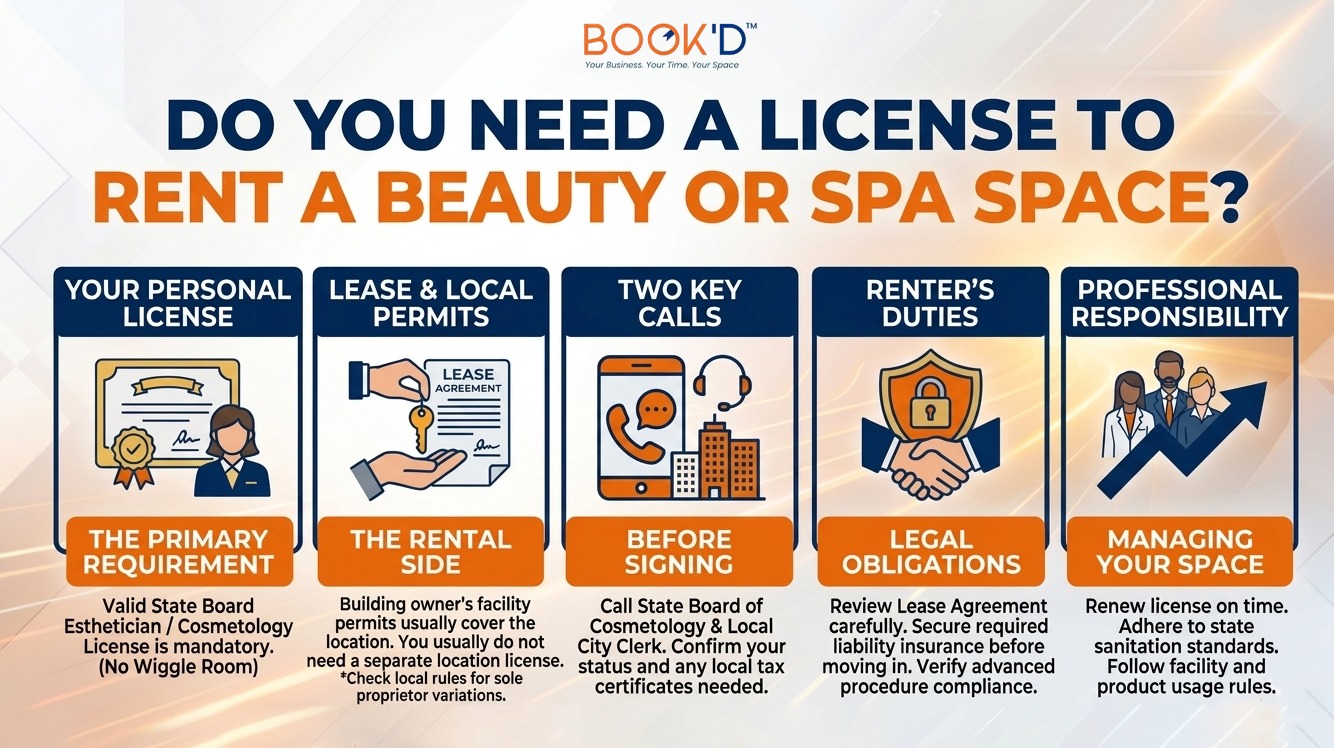
The question “Do you need a licence to rent a beauty space?” sounds like one but is actually two. Practitioners lease rooms from property owners. Aesthetics requires state certification. These are in separate lanes.
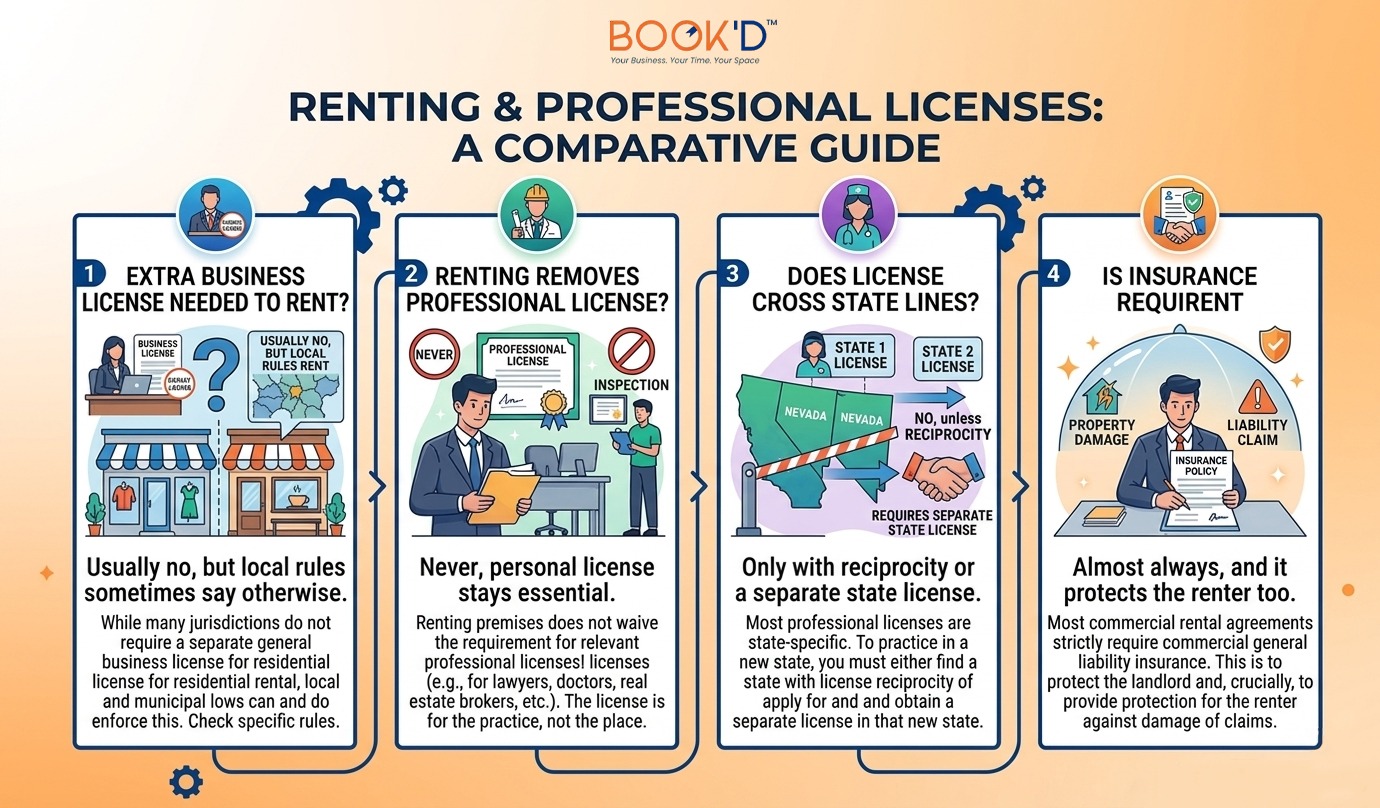
Most building owners or private salon suites operators have the necessary business licence. A room renter usually doesn’t need a business licence to enter that facility. The setup resembles subleasing. Different cities do things differently. Even when working in a licensed space, some municipalities require independent aestheticians to register as sole proprietors or obtain a local tax certificate. Assuming anything is risky because zip codes vary widely. Calling the state cosmetology board and city clerk resolves it faster than hours of internet searching.
The One License Nobody Can Skip
The professional license is the part with no wiggle room. Renting a treatment room does not make that requirement disappear. The state board expects an active esthetician or cosmetology license regardless of whether the services happen in a rented suite, a traditional salon, or anywhere else. That piece is black and white.
One quiet advantage of renting inside an established facility is that the location permits are already handled. The building owner dealt with the health department, the fire marshal, and the occupancy rules long before the first treatment bed arrived. Walking into a room that is already cleared for business removes a mountain of administrative slog. The practitioner just needs to show up with a valid personal license, and the rest of the compliance framework is already standing.
For a broader look at finding spaces like this, this guide on renting without owning a salon covers the options.
Legal Requirements for Renting Spa Space Near Me and Why They Vary
The legal requirements for renting spa space near me shift depending on what kind of services are on the menu. Basic facials, waxing, and lash work sit firmly under standard esthetic licensing. No surprises there. But when advanced treatments enter the picture, microneedling, deeper chemical peels, and certain laser procedures, the rules sometimes climb into a different category altogether. A few states classify those as medical procedures that need physician oversight. Performing them independently in a rented room without that layer of supervision can jeopardize a license.
Insurance is another piece that catches people off guard. Most rental agreements ask for proof of liability coverage before handing over the keys. The cost is not huge, but the protection matters. Some suite operators bundle insurance into the rental package. Others expect the renter to secure it independently. Asking which one applies before signing avoids a last-minute scramble. The lease itself deserves a slow read, too. Language around termination notice, access after hours, and storage policies directly shapes daily life in the space. A beautiful room that locks at six in the evening does not work for an esthetician whose clients can only come after work.
Ready to Rent Without the Paperwork Stress? Filter rooms by location and amenities while the legal side stays clear. Browse Just-Booked to meet local requirements.
Esthetician License Needed for Beauty Room Rental and What Gets Misunderstood
The talk around the esthetician license needed for beauty room rental gets tangled up with a few persistent myths. Some people believe going independent somehow loosens the licensing rules because nobody is standing over their shoulder anymore. That is exactly backward. Working solo in a rented room actually puts the personal license front and center. There is no salon owner’s umbrella to stand under.
Another snag involves renting across state lines. A license earned in one state does not automatically carry over to another. Someone who lives near a border and spots a perfect room twenty minutes away but in a different state needs to sort out reciprocity before committing. State boards tend to be straightforward about this when called directly. Depending on online forums for that kind of information is how mistakes get made. A five-minute phone call beats a costly assumption every time.
Common Questions at a Glance
 Rules for Renting a Beauty or Spa Treatment Room Beyond Just Licensing
The rules for renting a beauty or spa treatment room reach into areas that have nothing to do with government offices and everything to do with how the arrangement functions day to day. Some rental communities limit which product lines can be used. A suite owner might want everyone working with certain brands or ordering backbar supplies through specific vendors. These are not legal restrictions but they are contractual ones and worth understanding before committing to a space.
Sanitation standards sit where state law and landlord policy overlap. Boards mandate how tools get cleaned, how linens are handled, and what disinfectants are acceptable. Rental agreements often layer additional expectations on top of those minimums. Some spaces handle laundry and cleaning as part of the monthly rent. Others leave it entirely to the renter. Either model works fine as long as nobody is surprised by it a month in. The time to learn about these rules is during the walkthrough, not after the lease is signed.
Small Steps That Prevent Big Headaches
Calling the state cosmetology board takes barely ten minutes and settles the licensing question definitively. Asking the property manager for a copy of the rental agreement to review at home, without the subtle pressure of standing in their office, reveals details that get skipped during a tour. Contacting an insurance provider about liability coverage for a rented room removes another variable before it becomes a problem.
Talking to estheticians already working in the building is worth the effort too. They know if the hot water holds up through a full day of facials. They know if the parking situation actually works or if clients complain about it constantly. They know whether the community among renters is warm or chilly. That kind of ground level insight is not in any listing. For a look at what these rooms cost across different setups, this guide on rental pricing breaks down the numbers without the fluff.
Just-Booked connects beauty professionals with rooms where the groundwork is already done. Spaces that sit inside properly licensed facilities with rental terms that make sense both on paper and in practice. The move to independent practice comes with enough unknowns. The legal side should not be one of them.
FAQs
Do you need a license to rent a beauty space if already licensed in another state?
A license from one state does not automatically work in another. Some states have reciprocity agreements; others do not. Call the cosmetology board in the state where the rental sits and ask directly. Relying on assumptions here causes real problems.
What legal requirements for renting spa space near me should be checked before signing?
Confirm the personal professional license is active in that jurisdiction. Ask about any local business registration rules. Verify what insurance the space expects. Read the lease carefully for hours of access, termination policies, and any product restrictions.
Is an esthetician license needed for beauty room rental if only offering lashes or brows?
Yes. Any service that involves touching a client’s skin for beauty treatment purposes requires an active esthetician or cosmetology license. The specific service does not change that. A dedicated lash room for rent still requires proper credentials from the person using it.
Can a salon booth rental setup work without a separate business license?
In most cases, a salon booth rental arrangement runs under the establishment’s location license while the individual professional works under their personal license. Some cities still ask for a separate business tax registration even in this setup, so checking locally is wise.
What happens if a license expires in the middle of a lease?
Practicing with an expired license leads to fines and possible suspension. The responsibility to renew falls entirely on the individual. Property owners generally do not track license status for each renter, so the burden sits squarely with the practitioner.