

Every barber hits this fork eventually. The commission split that felt reasonable early on starts to sting once the chair stays full all day. Handing over a chunk of every cut when clients are walking through the door specifically for you starts to feel less like a fair deal and more like a quiet drain on income. The question of switching to a different pay structure creeps in.
The two main paths are simple enough on the surface. Commission means the shop takes a percentage of every service. Chair rental means paying a flat fee for the space and keeping everything earned after that. But the math underneath each option shifts depending on how busy the schedule is and what kind of career someone is trying to build. Understanding the real difference takes a little unpacking.
Barber Chair Rental vs Commission: What the Numbers Actually Look Like
The barber chair rental vs commission debate usually starts with a calculator. On the surface, commission looks safer because it scales down when things get slow. A slow week means a smaller check for the shop, too. The risk sits on both sides. But the ceiling is also lower. Someone pulling in good money during busy months still watches a percentage walk out the door.
Chair rental flips that equation. A flat weekly or monthly fee covers the space. Everything above that number belongs to the barber. During busy months, the income jumps significantly. During slow stretches, the rent still needs paying regardless of how many clients showed up. That fixed cost is what makes some people hesitate. The tradeoff is real. But for a barber with a steady client base, the math usually tilts strongly toward renting. A private barber studio takes this model even further by offering a fully enclosed room rather than just a chair on an open floor.
Booth Rent Barber vs Commission and Why the Right Choice Depends on the Season
The booth rent barber vs commission comparison is not purely about numbers. It is also about where someone is in their career. A newer barber still building a client list might benefit from the safety net that commission provides. The shop has a vested interest in keeping chairs full, and walk-ins get distributed. There is less pressure during the lean early months.
A barber with a full book of regulars is in a different position entirely. Those clients are not walk-ins. They book directly with a specific person. The shop’s role in filling the schedule shrinks while the commission percentage stays the same. That is when the flat rental fee starts looking like the obvious move. The income ceiling lifts, and the autonomy grows. For those who want to understand the full independent path, this guide on starting a barber business without a shop covers the broader picture of going solo.
How the Pay Structures Compare
 Ready to Make the Switch? Find chair rentals and barber studios near you with transparent pricing. Stop guessing and get in touch with Just-Booked.
Barber Income Comparison: Booth Rent vs Commission Over a Full Year
A barber income comparison booth rent vs commission looks very different when stretched across twelve months instead of one good week. Commission income is predictable. It rises and falls with the appointment book and the shop’s overall traffic. There are fewer surprises but also fewer breakout months.
Rental income swings more. A strong December with holiday bookings feels great because the rent stays fixed while the income climbs. A slow January stings because that same rent comes due regardless. Smart barbers who rent build a buffer during the busy months to smooth out the quiet ones. Over a full year, the rental model usually wins for anyone consistently booked. The gap widens as client loyalty solidifies and prices rise. A barber studio setup often commands higher service prices, too, because clients perceive the private experience as more premium.
Barber Pay Structure Explained Without the Industry Jargon
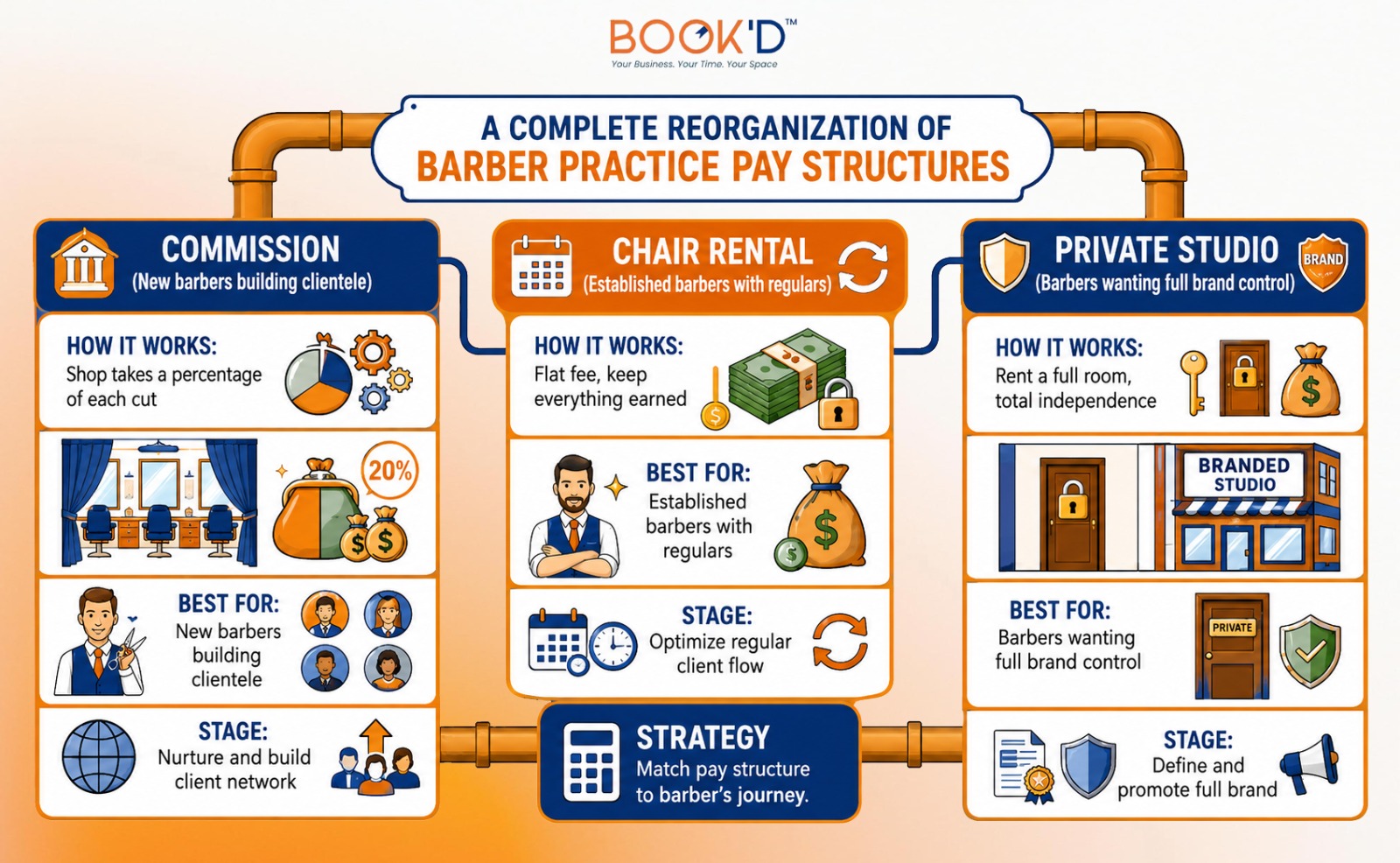
The barber pay structure, explained simply, breaks into three main lanes. Commission is the entry level. The shop provides the space, the utilities, the booking system, and often the products. In exchange, the shop takes a cut of every service. The split varies, but the structure stays the same.
Chair rental is the next step. The barber pays a flat fee for the space and operates as an independent contractor. Supplies, booking, and insurance become the barber’s responsibility. The tradeoff is keeping the full service price. The top end of independence is the private studio model, where a barber rents a fully enclosed room inside a larger facility. This offers the most control and privacy but comes with the highest fixed cost. Each rung on this ladder represents more risk and more reward. The right choice depends entirely on how full the appointment book actually is.
Just-Booked connects barbers with spaces at every level of independence. Chair rentals for those ready to make the jump. Private studios for those ready to go all in. Transparent listings with no hidden fees and no runaround. The right setup is out there waiting.
FAQs
What is the main difference between barber chair rental and commission?
Commission means the shop keeps a percentage of every service. Chair rental means paying a flat fee for the space and keeping everything earned after that. The Commission shares the risk. Rental shifts more risk to the barber but raises the income ceiling.
How do I know if I am ready to switch from commission to chair rental?
Look at the appointment book. If the chair stays consistently full with regular clients who book directly, the math probably favors renting. If there are still gaps and reliance on walk-ins, commission offers more stability during the build phase.
What extra costs come with renting a chair or studio?
Supplies, liability insurance, booking software, and sometimes utilities get added to the barber’s plate. These costs exist under commission, too, but the shop handles them. Budgeting for them before making the switch prevents surprises.
Is a barber studio better than a chair rental?
It depends on the clientele and the experience being offered. A private studio allows for higher pricing and a more premium client experience. It also costs more in rent. Barbers with a loyal following often find the upgrade pays for itself quickly.
Can I rent a chair part-time while staying on commission somewhere else?
Some barbers phase the transition this way. Renting a salon chair for rent a couple of days a week while keeping a commission spot for stability. Once the rental days fill up consistently, the switch becomes obvious.