
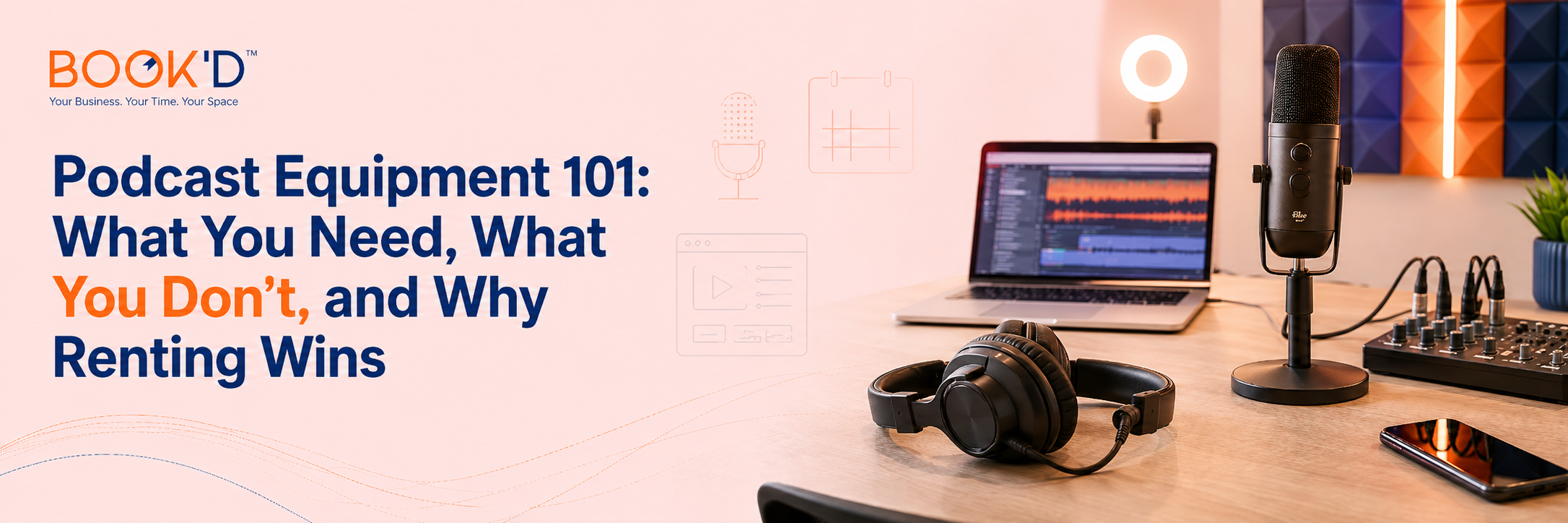
If you do not want the internet to tell you that setting up a podcast is going to take thousands upon thousands of dollars worth of equipment, then be prepared to hear about microphones that are the same price as an entire vacation, a mixing board filled to the brim with buttons more than an airplane pilot’s, and acoustic panels that turn any spare room into a broadcasting studio of the highest level. Enough to scare anyone into closing their browser window without even making a single recording.
There are a few items, however, that actually matter a whole lot, and everything else is just noise and spending money on useless things. Understanding what items are useful and necessary, while the other ones can easily go unnoticed, can help save money and effort. Also, it would be quite sensible to rent an entire studio from time to time instead of buying equipment.
What Equipment Do You Need for a Podcast, and What Can You Completely Ignore
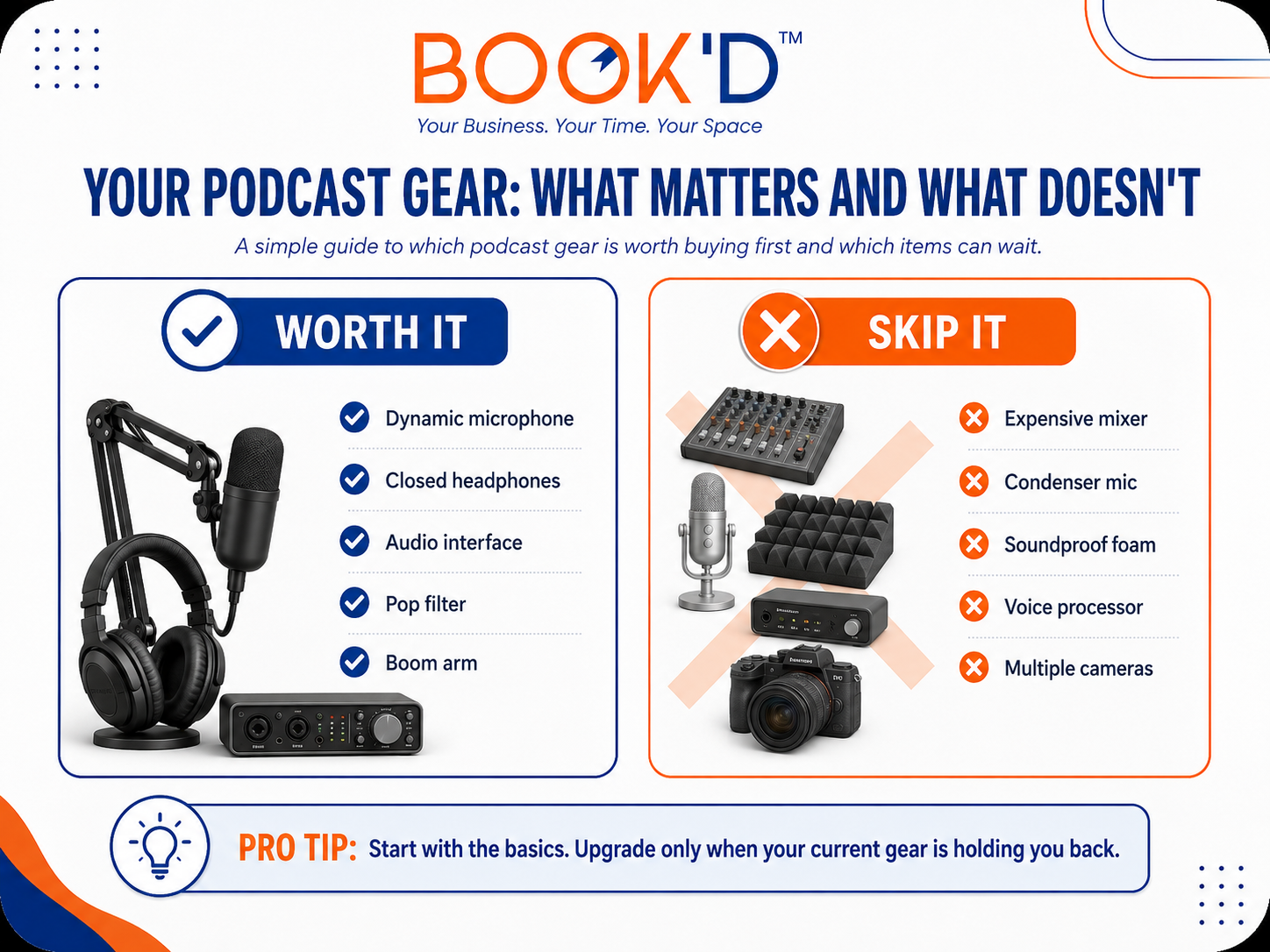
The question of what equipment do you need for a podcast has a simpler answer than most beginners think. A solid dynamic microphone, a pair of closed-back headphones, and an audio interface to connect everything to your laptop. That is the core of it. Everything else is just nice to have.
Dynamic microphones beat out condenser mics for most home setups because they naturally ignore a lot of the room noise happening around you. The Shure SM7B and the Rode PodMic are go-to choices that will not drain your bank account. A Focusrite Scarlett interface handles the analog-to-digital conversion without making things complicated.
Good podcast equipment starts with those three pieces and nothing more. For a wider look at how studios stack up against home recording, exploring the full spread of rental options can help you figure out which road actually fits your show.
How to Set Up Podcast Equipment Without Pulling Your Hair Out
The process of learning how to properly arrange podcast recording equipment makes a person become an unwilling sound engineer. There’s a mic plugged into the interface, and there’s an interface plugged into the computer, and there are headphones plugged into the interface to hear yourself. Everything needs the proper cable, the proper plug, and if something goes wrong, the whole chain will fail.
Then you get to tackle the software. Programs like Audacity or GarageBand work fine for getting started, but there is a real learning curve. A podcast room rental skips every single headache in that chain. The gear is already connected and tested and just sitting there waiting for you. You walk in and start talking while someone else deals with the technical mess. A rental podcast studio option lets creators pour their energy into the content instead of wrestling with cables and gain knobs.
Your Podcast Gear: What To Prioritize
 Stop Researching Gear and Start Recording! Just-Booked connects podcasters with studios that have everything set up and waiting. Find the right space and focus on your content instead of your cables.
How to Start a Podcast Without Equipment and Why Renting Just Makes Sense
The thought of how to start a podcast without equipment sounds almost impossible until you stumble upon studio rentals. A professional podcast studio rental hands you every piece of gear you could need. Microphones, headphones, interfaces, and a room that is already acoustically treated, all bundled into one booking.
This route is perfect for beginners who want to dip their toes in before dropping serious cash. It also clicks for seasoned podcasters who need a polished space for guest interviews or video shoots. The studio keeps the equipment maintained and upgraded so you never have to give it a second thought. A podcast studio rental turns a technical nightmare into something as easy as showing up and pressing record.
How to Use Podcast Equipment and Why the Learning Curve Is Steeper Than It Looks
Figuring out how to use podcast equipment eats up real time. Setting gain levels and positioning microphones and chasing down weird hums and buzzes are skills that take weeks or months to develop. A lot of beginners burn more hours fighting with their gear than actually making content.
A professional studio wipes that entire learning curve off the map. The equipment is already dialed in, and there is often an engineer around to handle levels and monitoring. You zero in on the conversation while the technical stuff hums along quietly in the background. A podcast room rental gives beginners results that sound professional from the very first episode.
The Smarter Way to Launch Your Podcast
Buying equipment and piecing together a home studio works beautifully for some people. Renting a professional space works better for most. The gear is already waiting, and the room already sounds good, and all the technical headaches have already been solved by someone else.
Just-Booked connects podcasters with studios that have everything locked and loaded. Hourly rentals for people who want flexibility and polished spaces for those who want consistency.
FAQs
What equipment will you require to start a podcast?
A good dynamic microphone, closed-back headphones, and an audio interface will be sufficient. You may use a pop filter and a boom arm. The basic things will cost you very little as compared to what beginners usually assume.
Can I start a podcast without buying any equipment?
Absolutely, by renting a professional studio. The gear is provided, set up, and ready to go. It is the fastest path to professional-quality audio without any upfront investment.
What is the best microphone for a beginner podcaster?
A dynamic microphone like the Shure SM7B or Rode PodMic. Dynamic mics naturally reject more room noise than condenser mics and are much more forgiving in untreated spaces.
How should I hook up all of my podcasting equipment?
Connect the mic to the audio interface via an XLR cable and connect the interface to the computer via USB. Headphones can be connected directly to the interface. The sound will be taken from the interface by your recording software.
Should I rent a podcasting studio or buy all of the equipment?
This is totally dependent on the frequency of your recording process. Rental will do wonders for weekly podcasts and those that involve interviews. Otherwise, buying your own equipment will work perfectly for daily podcasters working from one place only.