

Every podcaster faces this question. Charms of home setup. No commute, no booking ahead, no checking the clock because someone needs the room at noon. When inspired, get up and record. But the home setup has limits. Thin walls, loud neighbors, and a dog that barks when the guest makes their best point.
On the other hand, a professional podcast studio. Excellent acoustics, high-end microphones, and someone to handle the tech. Tradeoffs include cost and convenience. Neither option is superior. They just fit different podcasting stages and expected product sounds.
Podcast Studio vs Home Setup: Which Is Better for Your Specific Show
The question of podcast studio vs home setup which is better does not have a clean answer because every show has different needs. A good dynamic microphone and a quiet bedroom can produce a good solo podcast. Acoustic panels or heavy curtains improve audio quality. If the content is good and the host is real, most listeners will overlook minor recording flaws.
Multiple people recording together causes issues. Two voices on one microphone in an untreated room sound the same. The recording picks up street, refrigerator, and neighbor’s lawn mower noise as the echo builds. When podcast studios become practical rather than luxurious. Professional equipment and a controlled environment remove variables that editing cannot complete.
The Difference Between Home and Studio Podcast Setup Nobody Talks About
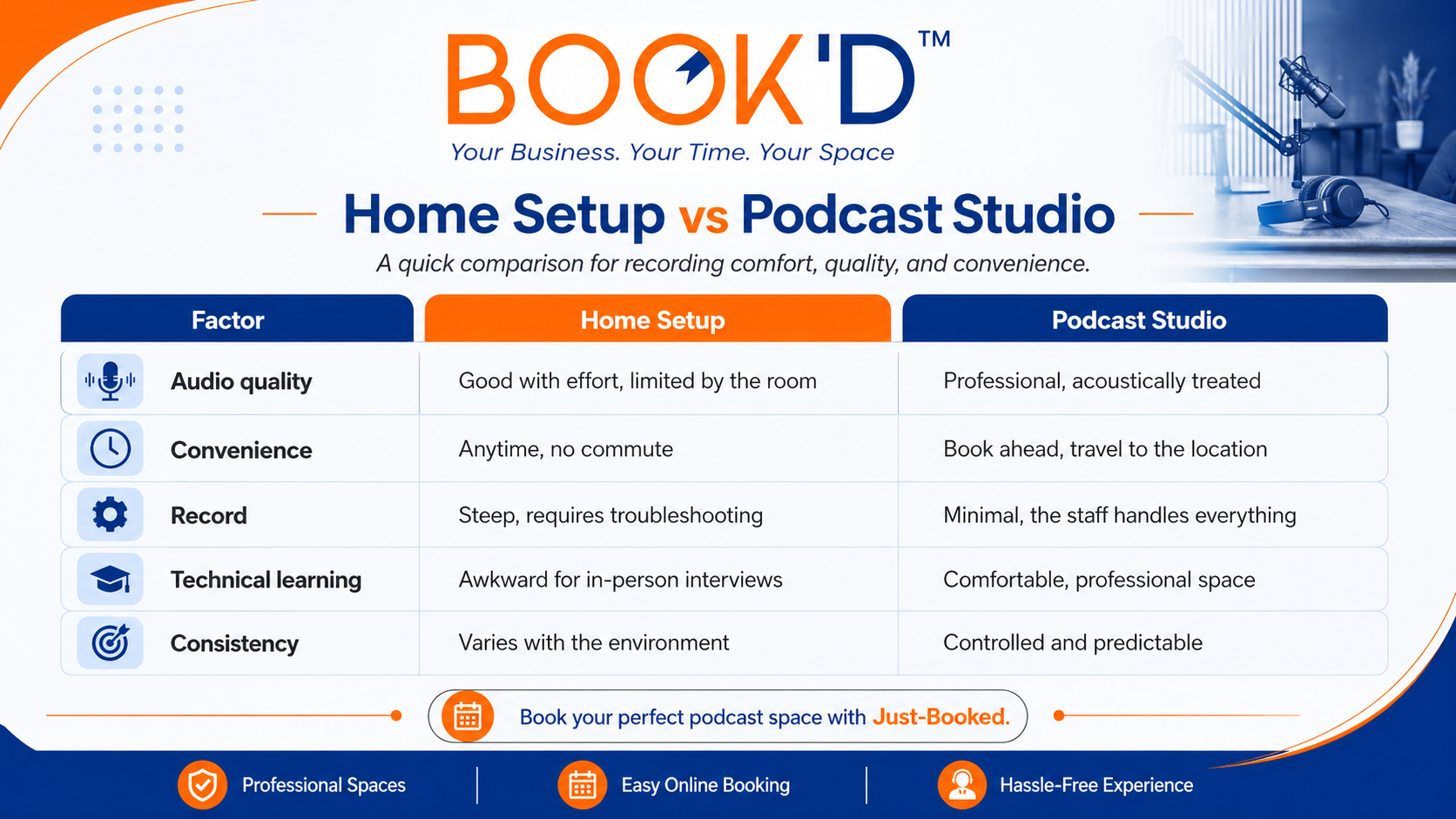
The difference between home and studio podcast setup goes deeper than just the gear. A home studio requires becoming an amateur audio engineer. Learning about microphone placement, gain staging, and how to treat a room so it does not sound like a cave. Some people enjoy that process. Most just want to record their podcast without thinking about sound waves bouncing off the ceiling.
A professional podcast studio removes that entire layer of friction. Walk in, sit down, and start talking while someone else handles levels, monitoring, and making sure everything records cleanly. The consistency matters too. An episode recorded at home might sound different depending on the time of day or whether the heat was running or if someone was doing construction down the street. A studio sounds the same every single time.
For those weighing the decision from the very beginning, this guide on starting a podcast without a studio covers the early-stage questions.
Home Setup vs Podcast Studio at a Glance
 Your Show Deserves Better Sound. Find a podcast space with everything already set up and waiting. Reserve a session with Just-Booked and focus entirely on your conversation.
Podcast Audio Quality Home vs Studio and Why It Matters More Than You Think
The question of podcast audio quality, home vs studio, hits on something that separates casual hobbyists from serious creators. Listeners put up with mediocre video quality all the time. They watch grainy phone footage without complaint. But bad audio makes people click away instantly. A podcast with muddy sound or distracting background noise loses credibility before the content even gets a chance to land.
A home setup can produce clean audio with enough effort and the right equipment. A treated room, a good microphone, and proper technique go a long way. But the ceiling is lower. There is only so much that software can clean up before it starts sounding unnatural. A professional podcast studio eliminates the noise floor. Silent HVAC systems, soundproofed walls, and microphones that capture every nuance of a voice without the room getting in the way. For shows that rely on interviews or co-hosts or want to attract sponsors, that quality difference matters.
Should I Rent a Podcast Studio or Record at Home When the Show Starts Growing
The question of whether I should rent a podcast studio or record at home becomes more urgent as the audience grows. A hobby show with a few dozen listeners does not need a professional space. The bedroom setup works fine, and the money saved can go toward better promotion or content research.
The tipping point arrives when the show starts generating income or when guests expect a certain level of professionalism. A podcast room rental makes sense when the calendar fills up with interviews and the editing process takes too long because of inconsistent audio from different locations. Some podcasters rent a studio for interviews and keep the solo episodes at home. Others make the full switch once the revenue justifies the expense. A flexible rent podcast studio arrangement by the hour lets shows test the waters without committing to a long-term lease. For those wanting a fully private setup, a studio space for rent offers even more control over the recording environment.
Making the Right Call for Where Your Show Is Right Now
The studio does not make the podcast. The host, the ideas, and the guests do. But the environment either supports the content or fights against it. A home setup works beautifully for some shows for years. A professional space becomes the obvious next step for others once the audience and the expectations grow. The smart move is being honest about what the show needs at this moment and adjusting as things change.
Just-Booked connects podcasters with studios that are already set up and ready to record. Hourly rentals for those who want flexibility. Professional spaces for those who want consistency. No long-term commitments and no expensive equipment purchases. Just quiet rooms with great acoustics and everything needed to focus on what actually matters.
FAQs
Is a home setup enough for a serious podcast?
Yes, if you work hard enough. A quiet treated room and a decent microphone can give very good results. The limitations become more apparent with multiple guests or noisy environments.
What equipment do I need to start recording at home?
It covers the basics with a dynamic USB microphone, a pop filter, and free recording software. Acoustic treatment, like curtains or foam panels, helps a lot and does not cost much.
How long does it take to learn home audio recording?
A few weeks of practice will get you through the basics. It takes longer to troubleshoot the room noise and learn the editing software. There is a learning curve, but most can handle it.
Can I rent a studio for one episode?
Most studios are hourly with no minimum commitment. This is great for trying out the waters or doing special episodes with guests.
Why is a podcast studio better than a home studio?
Consistent acoustics, pro mics, and someone else is doing the tech. This is most apparent in the case of multiple speakers, or when listeners use high-quality headphones.