

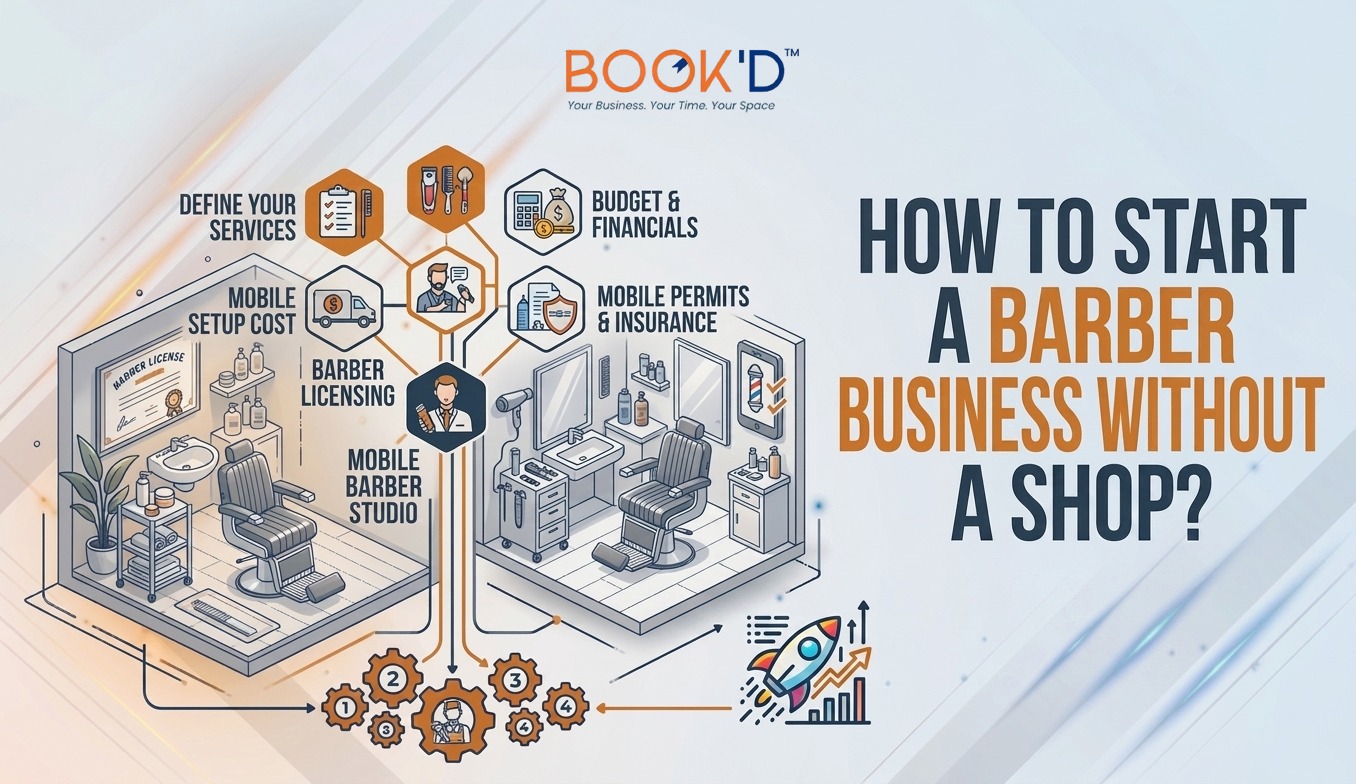
Owning a barbershop sounds romantic until the bills start piling up. The commercial lease, the utilities, the insurance, the endless list of things that break and need fixing. Plenty of talented barbers dream of working for themselves, but the traditional path of buying or building a whole shop stops them cold. The good news is that the path is not the only one anymore.
A growing number of barbers are skipping the shop ownership step entirely and still building thriving independent businesses. They rent chairs, lease private studios, or set up inside existing spaces that already have the infrastructure in place. The model strips away the parts of ownership that drain bank accounts and leaves the parts that actually matter. A steady clientele, full control over the schedule, and income that stays where it belongs.
How to Start a Barber Business Without Shop Ownership and Keep More of What You Earn
The question of how to start a barber business without shop ownership usually comes up when a barber has a solid client list and is tired of handing over a chunk of every cut to someone else. The math gets hard to ignore after a while. Commission splits that felt reasonable early on start to sting once the chair is full all day. The thought of keeping the full service price is what pushes most people toward independence.
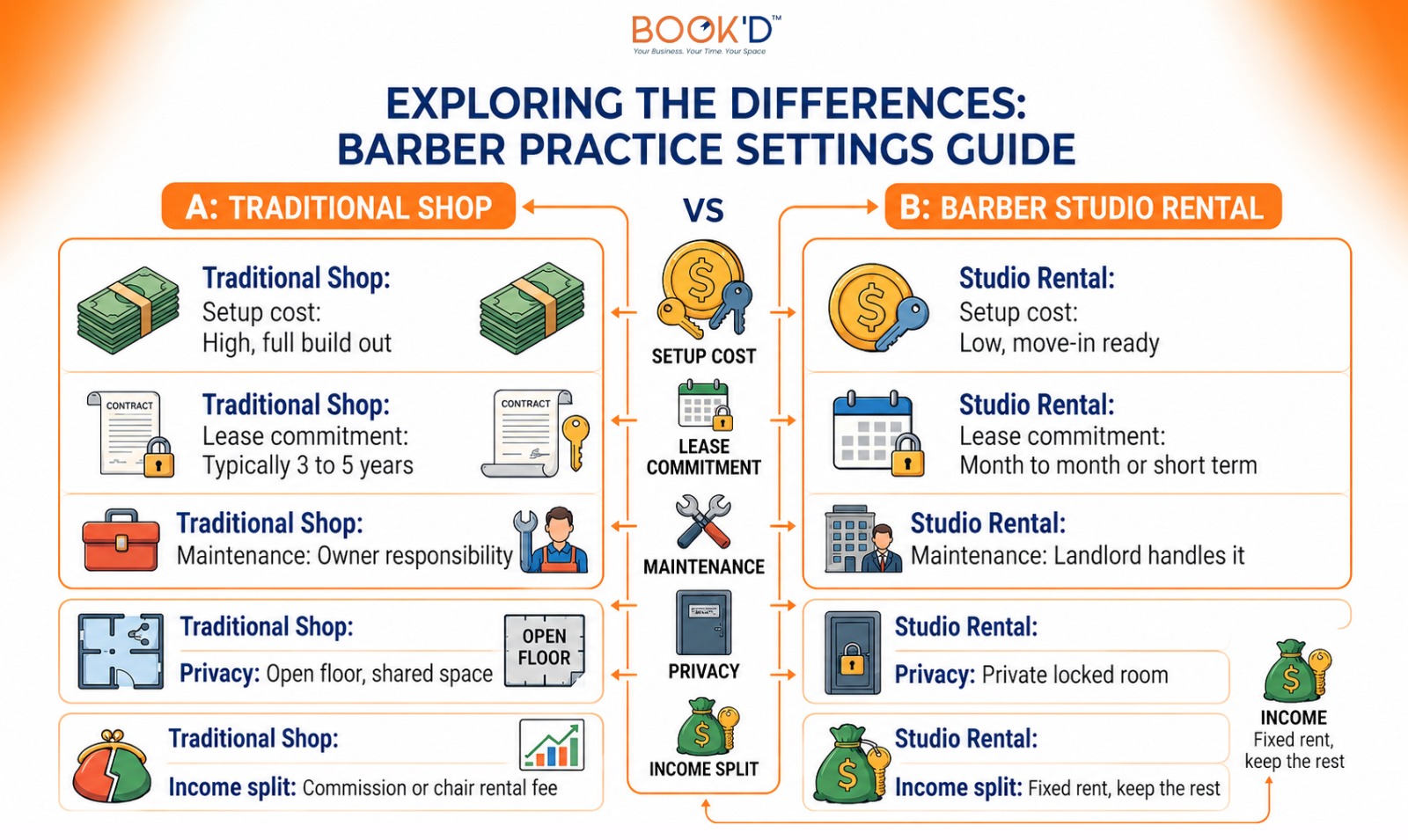
The traditional alternative used to be bleak. Sign a five-year commercial lease, build out a space from scratch, hire other barbers to fill chairs, and hope the numbers hold up. That model works for some, but the financial risk knocks a lot of talented people out of the running. The newer approach looks completely different. Rent a single chair or a small private barber studio inside a building that already has plumbing, electrical, and a waiting area in place. The overhead stays low and predictable. Freedom lands immediately.
What a Barber Studio Setup Actually Looks Like
A barber studio is not a closet with a mirror. These are purpose-built spaces designed for solo barbers who want privacy and full control over their environment. A locked room with a proper barber chair, a shampoo bowl, storage for tools and products, and enough square footage to move around comfortably. The client gets a one-on-one experience without the noise and chaos of a busy shop floor.
The barber gets something that is hard to put a price on. The ability to set a schedule that actually fits life. The freedom to choose which products to use and how to price services. The dignity of working in a space that feels professional and personal at the same time. Clients notice the difference immediately. They are not sitting in a row of chairs waiting for their turn. They are stepping into a private space where the experience is built entirely around them. That shift in perception makes it easier to charge premium rates and keep clients coming back.
What a Barber Studio Includes vs a Traditional Shop
 Ready to See What’s Available? Filter by location, price, and amenities all in one place. Find something at Just-Booked that fits how you actually want to work.
How to Become a Self-Employed Barber Without Getting Buried in Risk
The path to how to become self-employed barber is less complicated than most people think. The first step is making sure the client base is solid enough to support the move. A barber with a full book of regulars can transition smoothly. Someone still building a clientele might need to phase the move slowly, renting a chair part-time while keeping a commission gig for stability.
The second step is finding the right space. A barber chair for rent inside an existing shop is the lowest commitment option. Walk into a shop that already has foot traffic, rent a chair, and start taking clients. The shop handles the overhead, and the barber keeps a much larger percentage than in a commission arrangement. Some barbers start here and later move into their own private studio once the client list grows past a certain point. This flexibility is what makes the independent path accessible in a way that traditional shop ownership never was.
The Barber Business Startup Guide That Skips the Fluff
A realistic barber business startup guide does not need to be three hundred pages. A few things done right cover most of what determines success. Get the licensing right. Most states require a barber license, and some cities add a local business registration, even for independent contractors renting space. Check with the state board and city hall before assuming anything.
Invest in decent photos and a simple online presence. Clients searching for a new barber in the area will look at photos before they look at anything else. A clean, well-lit shot of the barber studio or chair setup does more for credibility than a long bio. Set up a booking system that makes scheduling easy and reduces the back and forth of phone calls. And protect the business with liability insurance. Most rental spaces require it, and even if they do not, it is worth having.
Just-Booked connects barbers with spaces that are already set up and ready to go. Private studios, chair rentals, and flexible arrangements that let the work speak for itself. No digging through outdated listings. No guessing whether a space has the right setup. Just rooms that fit the craft and the career.
FAQs
How to start a barber business without shop experience or a huge budget?
Start by renting a chair inside an established shop. The overhead is minimal, and the existing foot traffic helps fill the schedule while building a personal client base. From there, move into a private studio when the demand justifies the next step.
What license do I need to become a self-employed barber?
A state-issued barber license is the baseline requirement. Some cities also require a local business registration for independent contractors. Check with both the state licensing board and the local city clerk before getting started.
Is renting a barber chair better than leasing a whole studio?
It depends on the stage of the career. Chair rental offers lower risk and built-in foot traffic. A private studio offers more privacy and the ability to charge premium rates. Many barbers start with chair rental and transition to a studio later.
How do I find a barber studio for rent near me?
Look through platforms that specialise in beauty and barbering rentals rather than generic commercial real estate sites. These filter out irrelevant spaces and show only rooms with the proper setup already in place. Many salon suites for rent facilities also welcome barbers and have studios configured specifically for barbering services.
What is the ideal fee for an independent barber?
Examine the fee structures of other independent barbers offering the same services in the locality. The fee structure in private studios is normally higher due to the high-class nature of the experience. Charge in relation to the quality of your service and the environment, not just what others are doing.