


Signing a lease for a salon chair or suite stirs up equal parts excitement and nerves. There are a handful of things to know before renting salon space that can spare you from headaches and surprise cost to rent a salon space down the road. Walking in with the right questions turns the whole thing from a hopeful leap into a confident step forward.
Honestly, every rental looks decent at first glance. Warm lighting, nice chairs, friendly faces. But what actually makes or breaks the experience only surfaces after the newness fades. Asking the right stuff early keeps you from learning lessons the hard way.
What to Check Before Renting a Salon Space
When you step into a potential rental, slow yourself down and look past how pretty everything is. A gorgeous salon with a terrible lease will wear you out way faster than a modest spot with fair, transparent terms. Watch how the place actually runs during real business hours. Is the front desk handling things smoothly? Do the other renters seem relaxed or quietly stressed? The mood of a shared workspace seeps into your own day more than anyone likes to admit.
Enter physical details. Stand at the station and check lighting, shampoo bowls, and storage in every drawer and cabinet. Ask about cleaning, laundry, and common space maintenance. The little things add up quickly when you’re there daily. An okay spot during a 15-minute tour can feel cramped and inconvenient after five days of appointments.
Think about the location beyond just typing the address into your phone. Check out the parking situation, watch the foot traffic, and notice whether the building is easy to spot from the street. A beautiful suite tucked behind some confusing office complex will annoy your loyal clients way more than a simple booth right on a main road with easy access. Walk the exact route your clients would take. If it feels frustrating once, picture it on a jam-packed Saturday morning.
A Practical Checklist Before Renting a Salon Booth or Suite
Trying to remember everything during a walkthrough is a trap. A solid checklist before renting a salon booth or suite keeps your thoughts straight and makes sure you compare every space fairly. The stuff worth tracking covers obvious physical things and quieter details that only pop up once you are settled in and working.
Even stylists who have been at this for years forget to ask certain questions when the space looks exciting. Having a system removes that risk.
Here is a simple table to carry with you:
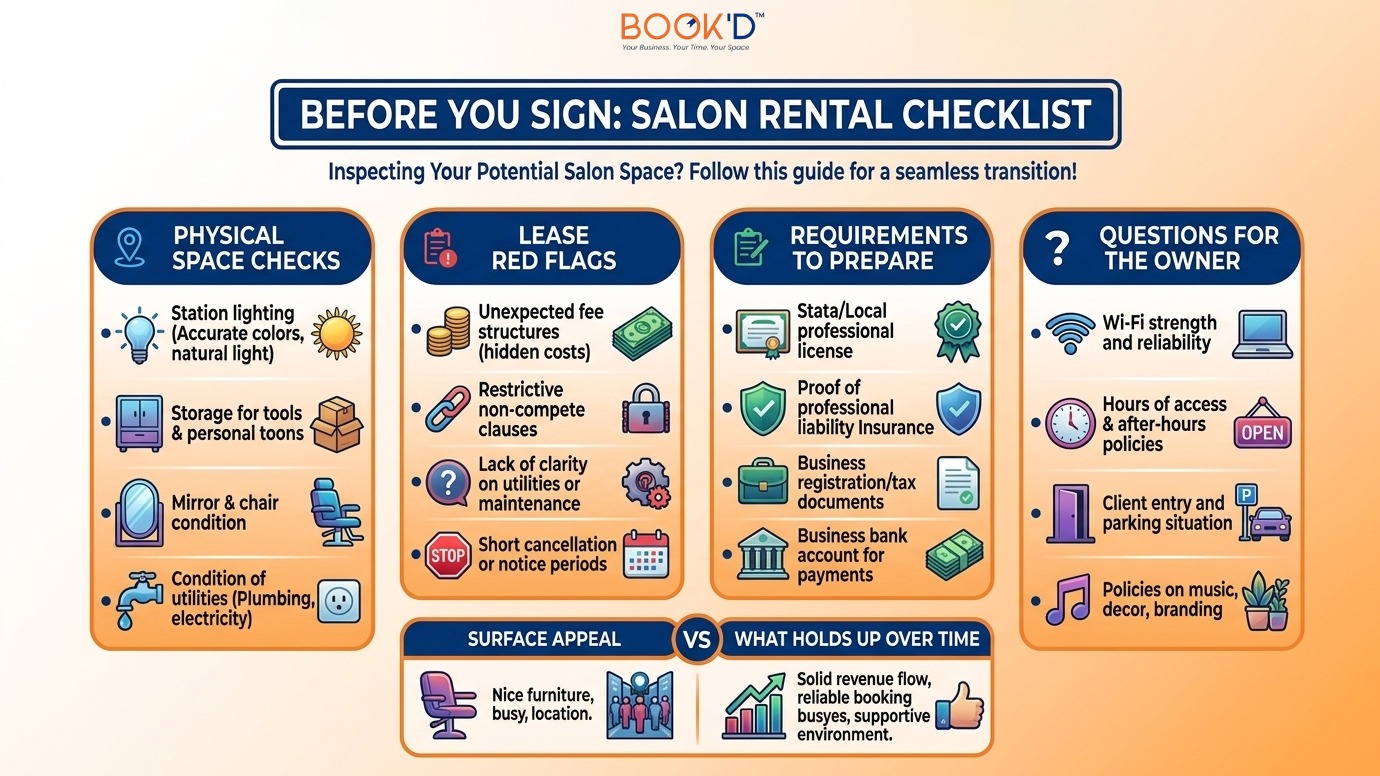
Understanding the Requirements for Renting a Salon Space
Before an owner hands over a key, they will usually want to see a few things from your side. Knowing the requirements for renting a salon space ahead of time makes the whole process smoother and shows you are serious and professional. Most will ask for your license, liability insurance, and maybe a quick summary of your experience and clientele.
Some need a deposit or the first month. No problem, just make sure to be clear right away. Owners like people who can fit in without having to fill out forms. Barbers who are loud and work quickly don’t belong in quiet, spa-like places, but the opposite is true. Finding out about these unspoken dynamics can help you find places where you can relax without trying too hard. Ask the owner which professionals do a good job in their space. They give away a lot by answering.
Stop the Endless Search. Just-Booked lets you filter salon spaces by amenities, location, and rental type so you can compare what actually matters.
What the Lease Agreement Reveals
A friendly handshake feels reassuring in the moment, but the written lease is what actually has your back. Read every single line, even when the owner seems great, and the space checks all your boxes. Pay close attention to how rent increases work, what happens if you need to take a vacation, and whether you are allowed to sublet your station during slower periods or personal time off.
Before you lock anything in, zoom out and think about the bigger picture. Our post on salon business without owning a salon explores how independent pros build profitable careers entirely through rental setups without ever taking on property risk.
Client ownership needs to be spelled out clearly. Your people are your livelihood, plain and simple, and no contract should suggest otherwise. The termination terms matter just as much. Knowing exactly how much notice you have to give, and what circumstances allow the owner to end things, keeps everyone honest. A fair lease protects the renter just as solidly as the landlord. If something reads vague or makes you uneasy, speak up before you sign. That conversation is a hundred times easier on the front end than three months into a misunderstanding.
Related Readings to Make a Smarter Decision
If you feel stuck between a shared station and a private room, salon suite vs booth rental lays out the trade-offs clearly so you can match your setup to your clientele.
And once your options are narrowed down, how much does it cost to rent a salon space? walks through what actually drives pricing so you can budget wisely without sticker shock.
Conclusion
Walking into a salon space rental with your eyes wide open changes the whole experience. The more you know about what to inspect, what to ask, and what to expect, the less likely you are to land in a setup that drains your energy and your income. The right space supports your craft, respects your independence, and makes running your own business feel sustainable instead of exhausting.
With clear listings, smart filters, and the ability to compare spaces on the things that actually matter, you spend less time hunting and more time doing what you love. The right space is out there waiting, and now you know exactly how to find it.
FAQs
What’s most crucial before renting salon space?
The biggest ones are knowing what the lease covers, what amenities are included, and if the salon’s culture suits you. Getting these straight early prevents surprises after moving in and booking.
Before signing a booth rental agreement, what should I check?
Check the termination clause, rate increase policy, access hours, and assistant/subletting restrictions. Write down that your client list is yours, no exceptions.
What are typical suite rental requirements?
Suite owners usually require a professional license, liability insurance, and a security deposit. Others may ask about your experience and whether your clientele can handle the commitment.
How can I fairly compare rental spaces?
Every visit, use the same checklist. Keep the same categories: physical condition, lease terms, amenities, client convenience, and vibe. Just-Booked simplifies side-by-side comparisons.
Can I negotiate my rental terms?
You should never feel awkward asking. Many owners are flexible on notice, small amenity inclusions, and payment schedules. That conversation should happen before you sign.