

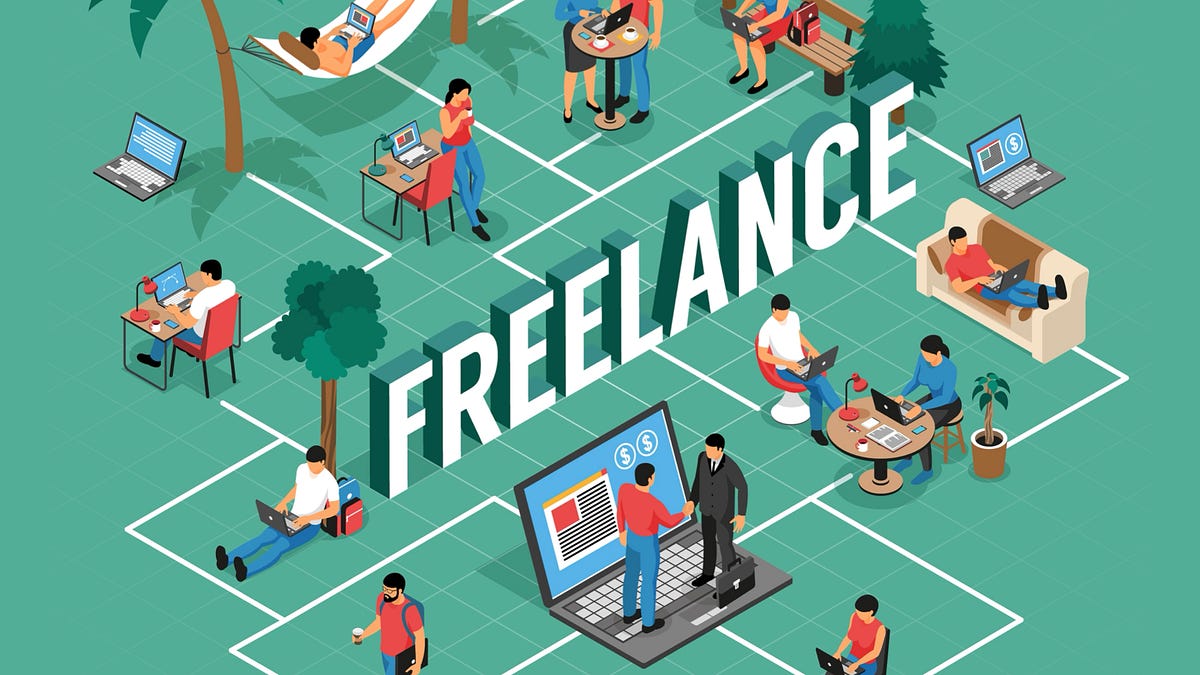
Working from home made sense at first. No commute, low overhead, total control over your calendar. For a lot of freelancers, that’s where the business started. And honestly? Nothing wrong with that.
But at some point, something changes. The kitchen table stops being a workspace and starts feeling like a bottleneck. You’re on a client call, half-watching whether your background looks professional enough. Creative work keeps getting derailed by normal household noise. And the real issue, the one nobody talks about as much, is that home spaces just weren’t built for the kind of focused, professional momentum a growing freelance business needs.
That’s where freelancer workspace rental comes in. Not as a splurge. Not as some unnecessary line item. But as a real business decision that changes how you work, how clients see you, and ultimately what you’re able to earn.
This post walks through how freelancers across different fields use rented spaces on purpose and why the right environment might be the most overlooked growth tool you have.
Why Your Workspace Affects Your Income More Than You Think
The Environment and Productivity Connection
There’s real research behind this: your physical environment shapes how well you think. A dedicated workspace tells your brain it’s time to focus. Without all the usual home distractions, you spend less mental energy switching gears. And just the act of going somewhere specific to work creates a clear line between “work time” and “personal time”, something remote workers constantly struggle with.
For freelancers, that line matters in dollars and cents. Scattered focus means scattered output. Late deliverables, uneven quality, trouble getting into deep work, all of that chips away at the reputation you need to charge higher rates. Freelancers who work in dedicated environments, even just part-time, consistently say they concentrate better, do stronger creative work, and keep business and life more separate.
That’s not fluff. It shows up in better client work, faster turnaround, and having the headspace to actually grow your business instead of just grinding through tasks.
How Professional Spaces Change What Clients Think
Perception shapes pricing more than most freelancers want to admit. A client’s willingness to pay top dollar depends on more than just your portfolio; it depends on whether they see you as a serious pro or a hobbyist with some availability.
Meeting a client in a well-designed, private studio feels completely different from a coffee shop or a home office visible in the background of a video call. The space says investment, structure, staying power. Those signals build trust, the kind that leads to longer projects, bigger budgets, and referrals to other high-end clients.
Good freelancer workspace ideas that keep client optics in mind aren’t about faking being bigger than you are. They’re about showing the professionalism that’s already in your work, in a setting that makes it believable.
What Kind of Space Works for What Kind of Freelancer
Studios and Creative Spaces
If you’re a photographer, content creator, videographer, makeup artist, or anyone else in a visual field, having access to a real studio often makes the difference between work that looks pro and work that looks thrown together. Lighting, backdrops, sound treatment, enough square footage, most people can’t pull that off at home without spending a ton.
Hourly studio rental fixes that without you having to own anything. Book the hours you need, use a space that’s actually built for the job, and pay for exactly what you use. If your studio needs to come and go with different projects, this is just smarter money than building or leasing a permanent space.
This guide on why renting a workspace beats owning for service professionals gets into the financial details, but the short version is: paying for space you don’t consistently use is a waste. Rental models cut that waste out completely.
Podcast and Audio Spaces
Audio is serious business now. And the quality gap between recordings made in a treated room versus an untreated one is obvious to anyone who listens. If you produce podcasts, voice-over, audio branding, or video content where sound matters, the recording environment isn’t optional.
Podcast studio rental gets you professionally treated rooms, good mics, and the acoustic isolation that home setups almost never have. Booking by the session ties the cost directly to paid work, so it stays reasonable even if you’re still building your client list.
Freelancers who take audio quality seriously tend to land better clients, charge more, and get more referrals. Quality sends a signal. And that signal starts with the room.
Specialty Spaces for Beauty and Wellness Freelancers
Independent beauty pros deal with a particularly interesting version of this. The alternative to renting a space, leasing, or owning a full salon comes with serious financial weight. This blog on salon ownership costs breaks it all down. Between lease commitments, buildout, equipment, and staff, traditional salon ownership can run hundreds of thousands of dollars before a single paying client walks in.
Studio space for rent through flexible booking platforms gives independent stylists, lash artists, estheticians, and nail techs a professional environment without that kind of exposure. Clients get a private, polished experience. Costs line up with actual usage. And you keep the freedom that comes with working for yourself.
Using Space on Purpose to Grow Your Freelance Business
Matching Space to Your Revenue Goals
The freelancers who get the most out of workspace rental aren’t just booking spaces because it feels more professional. They’re using space as a deliberate tool to grow in specific, measurable ways.
That might mean a photographer booking a studio for a content day, shooting multiple clients back-to-back to get the most out of one booking fee. Or a consultant renting a private meeting room for proposal presentations aimed at closing bigger contracts. Or a beauty pro using a rented suite to test a new service before committing to a permanent space.
In every case, the space is a lever, not just an expense. The question isn’t “does renting a workspace cost money?” It’s “Does the revenue it helps you earn cover the cost?” For most working freelancers, that math clearly favors strategic rental.
The Kind of Flexibility Freelancers Actually Need
One of the biggest things modern workspace rental platforms offer is flexibility. Freelance income goes up and down. Client volume changes. Project timelines move around. A workspace model that locks you into a fixed monthly payment just doesn’t fit that reality.
Flexible workspace for freelancers means booking what you need when you actually need it, calling up when you’re busy, scaling back when things are slower. That kind of elasticity matters financially, especially early on when cash flow is less predictable.
Being able to find professional spaces in different locations also helps if your clients are spread out. Booking a pro-environment close to where a specific client is, instead of asking them to come to you, is a small edge, but it adds up.
What to Actually Look for in a Rental Space
Not every space you can rent is worth renting. Learning to spot the difference saves you money and frustration. A few things tend to matter most.
First, does it actually fit what you do? A space can look great in photos but be totally wrong for your work. Audio people need acoustic treatment, not just quiet. Photographers need controllable lighting, not just a clean backdrop. Beauty pros need proper plumbing and ventilation, not just a nice-looking room.
Second, where is it relative to your clients? If your clients have to go way out of their way to meet you, that kills the professional experience you’re trying to create. For client-facing work, being close to your main clients matters.
Third, how easy is the booking process? This matters more than you’d think until you’ve dealt with a clunky system. Platforms that handle scheduling, payment, and confirmations smoothly cut down on admin hassle that eats up your productive time.
This blog on starting a beauty business without a full salon covers the rental model specifically for beauty freelancers, including what to look for and how to vet spaces before booking. The same ideas apply to most freelance work.
How Workspace Rental Stacks Up Against the Alternatives
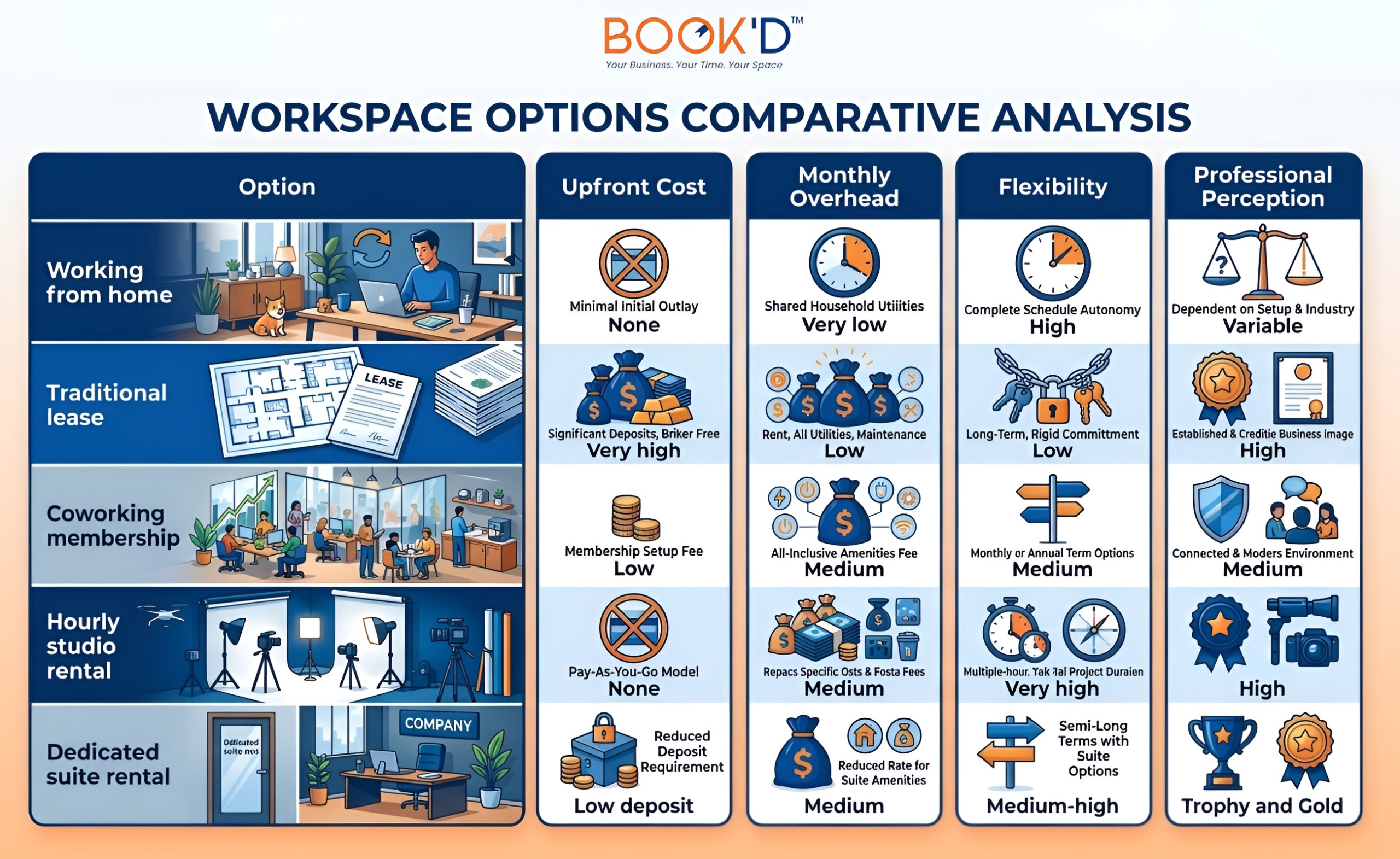
The rental model does something that working from home and long-term leases can’t: high professional perception, low financial commitment, and real flexibility all at once. For freelancers at most stages of their business, that combo is hard to beat.
FAQs
Is renting a workspace worth it as a freelancer?
For most freelancers who work with clients or need specialized setups, yes, it’s worth it. The professional credibility plus the productivity boost from a dedicated space usually brings in more income than the space costs. Renting by the hour or by the session keeps expenses tied directly to working time, so the math works even when your income varies.
What’s the best workspace rental model for freelancers?
Depends on what you do and how much client work you have. Hourly or session-based bookings work well for irregular schedules or project-based work. Weekly or monthly suite arrangements are better if you have steady client bookings and want a consistent, personalized space. Most freelancers find it makes sense to start with hourly options and move toward more regular bookings as volume picks up.
How does having a professional workspace help grow a freelance business?
A professional workspace helps in a few connected ways. It improves the quality and consistency of what you produce. It changes how clients perceive you. It lets you offer higher-value services. And it gives you the focused environment you need to think strategically about growing instead of just executing. Freelancers who work in professional spaces also tend to charge more, because the professional setting backs up their premium positioning.
Do freelancers need a permanent space, or is flexible rental enough?
For most freelancers, flexible rental is not just enough; it’s better than a permanent commitment, especially early and mid-stage. Flexible rental has no fixed overhead, adapts to ups and downs in income, and lets you use different types of spaces for different projects. A permanent lease only makes sense when your client volume is high and steady enough to justify the fixed cost even on slow weeks.
How do I find professional studio spaces to rent as a freelancer?
Use dedicated workspace rental platforms where you can search by location, space type, date, and specific amenities. When you’re looking at options, focus on spaces that actually fit your work, are easy for your clients to get to, and are listed on platforms with clear booking and payment systems. Reading reviews from other freelancers in your field is one of the best ways to tell if a space will actually deliver.